Navigating the world of autism services can be overwhelming, especially when faced with experts and professionals ready to enroll your child into treatment. More often than not, these ‘doctors’ claim titles that sound more clinical than they actually are. It is important for families to approach the label of “doctorate-level autism expert” with a healthy degree of skepticism. While the title suggests a broad medical or diagnostic authority, it is often an academic distinction rather than a shift in legal professional scope. You are entitled to treat these claims as starting points for verification rather than a reason for blind trust.
Brian Jadro, Ph.D., LABA, BCBA-D profile helps illustrate the difference between academic achievement and clinical authority. A doctorate (such as a Ph.D. or Ed.D.) signifies that an individual has completed advanced coursework in higher education. The ‘‑D’ in Jadro’s title serves as a ‘badge’ of higher education, but it does not expand his legal scope of practice beyond behavioral interventions. However, it does not grant new legal powers to diagnose or treat conditions outside of one’s original license.
It is important for parents and professionals to distinguish between Brian Jadro’s clinical and academic history. Twenty years ago, Brian Jadro began his career at the foundational level, serving as a classroom aide and teacher (2006 -2009), roles that provided him with direct, front-line experience with autistic children. More recently, he is the Director of Service Operations at Grow Associates, Inc., where he oversees day habilitation and community-based programs for adults with disabilities. He also holds an adjunct faculty position at William James College, where he teaches behavior analysis.
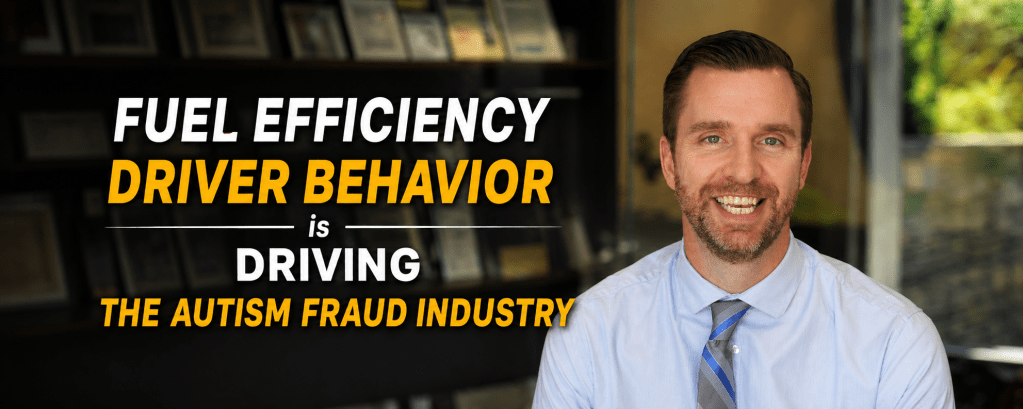
His 2017 doctoral dissertation, claims that despite greenhouse gases and climate change, drivers in the United States continue to operate vehicles that consume more fuel per mile and emit higher levels of greenhouse gases than the vehicles driven in other developed nations. He utilized a “treatment package” of specific targets and real-time dashboard displays to modify the driving behavior of three participants, to evaluate how to increase their fuel efficiency. His 2020 study applied similar behavior science principles to office ergonomics, applying a wearable device to provide vibrotactile feedback for six participants. In an office setting, real-time physical prompts significantly improved sitting posture and reduced low back pain. According to his experiment, the benefits were maintained even as the frequency of feedback was systematically reduced.

Brian Jadro’s doctoral research focuses on applied behavior science in non-clinical areas, such as increasing fuel efficiency and improving office ergonomics.
On Jadro’s faculty profile college where he teaches the next generation of behaviorists, he lists talks at the ABAI (Association for Behavior Analysis International) and BABAT (Berkshire Association for Behavior Analysis and Therapy) conferences on topics like sitting posture and technology addiction. These are regional and national conference presentations rather than peer-reviewed journal articles. These titles are under “publications and presentations”; none of the titles are peer-reviewed scientific studies pertaining to autism, children, or clinical practice research.
Jadro’s various roles ranging from “Operational Scientist” to “Adjunct Professor”, are rooted in his BCBA-D and LABA licensure. While he possesses a high level of academic training (the “badge” of the Ph.D.), his autism authority is built upon the same entry-level behavioral license as your neighborhood technician. Online, Brian Jadro poses as an autism expert with decades of experience. This is important for a parent to unpack before accepting that he is a “therapist” of any kind, and qualified to make treatment decisions for autistic people as a “doctor”.
To understand the broad scope of autism services, it is helpful to distinguish between the different tiers of providers. A Behavior Technician (BT or RBT) is an entry-level practitioner who works 1-on-1 with a child to deliver a behavior intervention designed by their supervisor. A Board Certified Behavior Analyst (BCBA) is a licensed behavior analyst who designs a treatment plan and supervises the technicians. A master’s degree or college education in Applied Behavior Analysis (ABA) is not required to deliver ABA services. For Master’s level behaviorists, a graduate degree in a “related” field such as Psychology or Education is sufficient, and then they need a specific sequence of behavior-analytic coursework to obtain their license.
A Licensed Behavior Analyst (LBA) / Licensed Applied Behavior Analyst (LABA) is simply your state’s title for that same role. The BACB (Behavior Analyst Certification Board) is the industry’s national accreditation body. They determine which colleges should be accredited for their coursework offerings. They also maintain a searchable database for verifying a practitioner’s license. The BACB does not review a person’s character, criminal record, or business ventures. They are simply a national holdings organization that centralizes the steps for practitioners to achieve licensure. The Behavior Analyst Certification Board (BACB) does not directly require fingerprints for NPI or certification.
Expert or Asset? How Private Equity Uses ‘Dr. Brian Jadro’ to Scale the Autism Industry
In the current autism service industry, people like Brian Jadro act as a strategic asset for corporate scalability. By holding a BCBA and an active NPI (National Provider Identifier), he provides the essential legal mechanism that allows corporations to bill insurance for services at scale. When this billing power is paired with a Ph.D., the title “Dr. Jadro” functions less as a mark of clinical or developmental expertise and more as an “ornamental” marketing tool designed to instill trust and discourage parental skepticism. His clinical foundation is rooted in a 40-hour technician model rather than comprehensive diagnostic or psychological training. The doctorate serves as a prestige-building facade that allows an organization to style itself as an industry leader while operating under a narrow, technician-style scope of care.
The public interactions and professional history of Brian Jadro, reveal a complex intersection between clinical advocacy and corporate positioning. In April 2025, Jadro posted a critical review of a competitor, Behavior One Autism Solutions, claiming the owner viewed autistic individuals as “injured for life.” However, the organization’s public rebuttal characterized his comment as a “malicious misquote,” clarifying that the original statement,”No child should be injured for life due to society’s ignorance”, was an expression of concern regarding societal hazards rather than a disparagement of autistic people. This exchange highlights the competitive friction within the ABA industry, where established clinicians often use their “expert” status to challenge the ethical standing of rival providers. Brian Jadro’s public digital footprint consists of two notable reviews: a critical 1-star warning regarding the owner of Behavior One Autism Solutions in California and a glowing 5-star recommendation for the food and service at Kitchen 27 in New Jersey.
When examining the credentials that bolster this “expert” status, a clear timeline emerges that distinguishes clinical experience from academic titles. While Jadro styles himself as a doctoral-level expert, his BACB certification records show an original certification date of January 31, 2011, nearly a decade before he earned his Ph.D. from Simmons University in 2020. This confirms that his fundamental clinical training and his NPI (National Provider Identifier) are based on his earlier master’s-level education and his background as a classroom aide. Consequently, his doctorate functions as a supplemental academic achievement rather than a broad clinical expansion, serving as a prestige-building asset that corporations can utilize to navigate the regulatory and competitive landscapes of autism services.
The Marketing Facade: Ornamental Credentials of Corporate Autism Experts
Dr. Brian Jadro’s profile is highly desired by private equity companies because he provides the essential billing credentials (BCBA/NPI) and the prestige (Ph.D.) necessary to raise capital, acquire market share, and rapidly scale a service that is fundamentally built on an entry-level technician model. The Behavior Analyst Certification Board (BACB), which issues the BCBA and BCBA-D certification, does not directly require fingerprints for NPI or certification. This means that professionals in this field may not undergo the same level of character and criminal record review required of other healthcare or licensed clinical roles, which introduces a potential safety oversight concern to parents.
The current structural vulnerabilities in Applied Behavior Analysis (ABA) regulation expose states to federal audit actions and significant fiscal penalties. The Centers for Medicare & Medicaid Services (CMS) is a U.S. federal agency within the Department of Health and Human Services (HHS) that provides health coverage to over 160 million Americans and administers major healthcare programs. CMS has the authority to withhold or demand repayment of federal Medicaid matching funds (FFP) if a state fails to adequately regulate services, ensure safety, and enforce program integrity safeguards.
Future regulatory measures already established in New York, are being heavily debated in Illinois. State governments are pushing for a critical distinction between a provider’s underlying license and their academic title. While some behaviorists argue that these restrictions could stifle access to care or force existing businesses to close, lawmakers contend that mandating a licensed owner shifts legal liability directly to the professional who is actually authorized to bill for care.
New laws in the United States are pushing for clinics to be owned and operated by ABA clinicians, those with an NPI, but that will not effectively safeguard autistic children from strategic marketing. State policies have expanded the scope of reimbursable services and personnel, effectively diluting qualification standards for providers and increasing the likelihood of Abuse (practices inconsistent with accepted standards) and Waste (overutilization or inefficient use).
While a BCBA-D has spent more time in college than a paraprofessional technician, it is important to note that they share the same legal scope of practice as a standard BCBA. Compared to a Physical Therapist (PT), your PT follows a rigid, human healthcare path from the start while a BCBA can enter the field with behavioral training to get their certification. Ultimately, because the BCBA requirements allow for these different “starting points” as long as you finish the specific behavior classes, it is much easier for professionals from other backgrounds to get a National Provider Identifier (NPI), which is what identifies their service as billable with a health plan.
As you can understand now, NPIs come in all shapes and sizes, and parents must know how to identify training pathways before believing everybody who says they’re a “therapist” is properly licensed to say that. A Physical Therapist (PT) training highly controlled both on a national level and in your individual state. There aren’t many “shortcuts” to becoming a PT; you either have that specific health professional degree or you aren’t a PT.

Just because the sign says ‘Clown Therapy’ doesn’t mean the bunny is a licensed clown. A reminder that a Ph.D. is an achievement, but it doesn’t change your legal scope of practice.


Leave a Reply